Tapestry - A Novel
"The World and Destiny Wait."


Jan 15, 2026
PROTECTING THE SACRED OASIS OF THE OKAVANGO DELTA
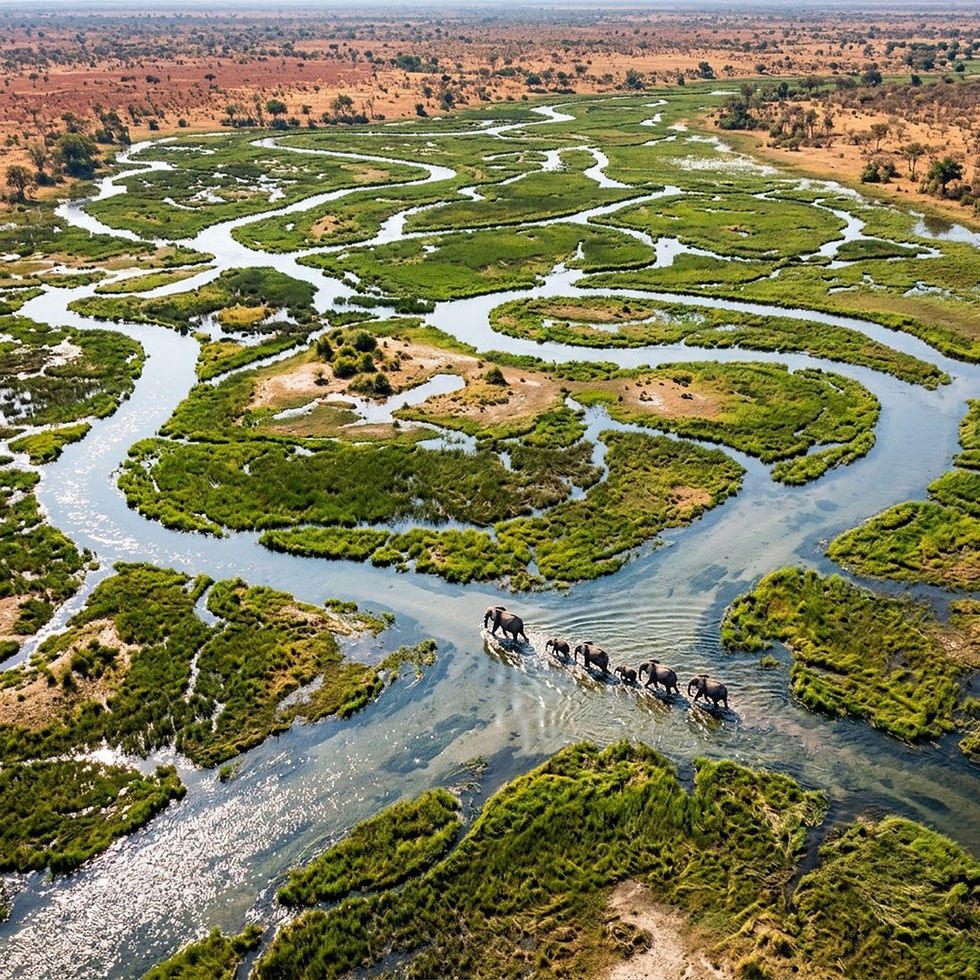
Deep within the northern reaches of the Kalahari Desert in Botswana lies a biological masterpiece: the Okavango Delta. As a UNESCO World Heritage site and a sanctuary of international importance, this vibrant inland oasis is home to nearly 2,000 species of plants and animals, including highly endangered African wild dogs, iconic rhinos, and the continent's largest remaining population of African bush elephants.
But even a wilderness as vast and majestic as the Okavango is facing quiet, complex pressures that threaten to disrupt its delicate balance.
To truly protect this sanctuary, we have to understand the modern challenges facing it:
1. Threats to Land and Water
The lifeblood of the delta is its water, which originates far to the north in Angola. Planned industrial agricultural projects upstream and nearby oil exploration threaten to divert or pollute the waterways. Protecting the delta requires international cooperation through coalitions like the Permanent Okavango River Basin Water Commission (OKACOM) to ensure commercial development doesn't starve the wetlands downstream.
2. The Complex Reality of Poaching
Poaching in the delta is multi-layered, driven by two very different forces:
Local Conflict & Bushmeat: As elephant populations successfully rebound, they occasionally wander into neighboring farmland, destroying crops and threatening the livelihoods of people living below the poverty line. For some, subsistence poaching is viewed as a desperate means of crop protection or a source of food.
Organized Foreign Syndicates: Conversely, the highly destructive poaching of rhinos for their horns is driven by sophisticated, heavily armed international syndicates crossing borders to feed black markets overseas.
3. Empowering the Protectors
The key to saving the Okavango Delta lies in bridging the gap between wildlife protection and human prosperity. Conservation experts agree that the most sustainable path forward is community-led conservation. By sharing tourism profits directly with local communities and hiring residents—including those with expert wilderness skills—as wildlife managers and rangers, we turn former threats into active guardians of the ecosystem.
