Tapestry - A Novel
"The World and Destiny Wait."


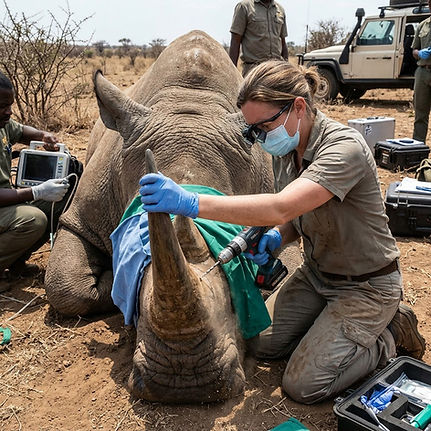
HOW SCIENTISTS ARE USING RADIOISOTOPES TO STOP RHINO POACHING
What if we could turn the global nuclear security network into a shield for endangered wildlife?
In a groundbreaking initiative led by South Africa's University of the Witwatersrand alongside the International Atomic Energy Agency (IAEA), researchers are rolling out a revolutionary weapon in the fight against illegal trafficking: The Rhisotope Project.
Scientists are safely inserting low-level, non-toxic radioisotopes into the horns of live rhinoceroses. This cutting-edge innovation attacks the illegal wildlife trade from two distinct angles:
Turning Borders into Traps
There are already over 10,000 radiation-detection monitors active at international airports, shipping ports, and border crossings worldwide. By treating a rhino’s horn with radioisotopes, any attempt to smuggle it across a border immediately sets off nuclear security alarms—even if the horn is hidden inside a massive, 40-foot steel shipping container.
Crushing Black Market Value
Rhino horn is currently one of the most lucrative illegal commodities on Earth, at times fetching higher black-market prices than gold or platinum. By introducing trace radioactive material, the project devalues the horn for end-users and creates a massive risk for smugglers. As the project’s lead scientist, Prof. James Larkin, put it: "No one wants a radioactive horn."
100% Safe for the Animals
Careful research and extensive biological testing have confirmed that the low-dose isotopes cause zero harm to the rhinos or their caregivers. The material stays strictly within the horn itself, requiring only periodic renewal while allowing the rhino to keep its horn fully intact.
My own conservation efforts are deeply focused on supporting innovative, science-driven solutions that protect our planet's iconic species. Combating organized crime syndicates requires us to stay one step ahead, blending field security with advanced technology to ensure these majestic animals have a future in the wild.
Join Our Global Conservation Network:
The fight against poaching relies on an active, educated community. If you want to dive deeper into cutting-edge conservation breakthroughs, get regular updates from the frontlines, and learn how you can make a real difference, please sign up for my newsletter right on the homepage of my website. Let’s protect the wild together!
